DNA goes in
Alfred Hershey and Martha Chase worked with a phage: a tiny virus that attacks bacteria. It is just a protein coat with DNA packed inside.
A phage lands on a bacterium, and soon the bacterium bursts, full of new phages. So something from the phage gets inside and carries the instructions.
Many scientists still bet on protein: it is far more varied, while DNA looked too simple to hold instructions.
What they found
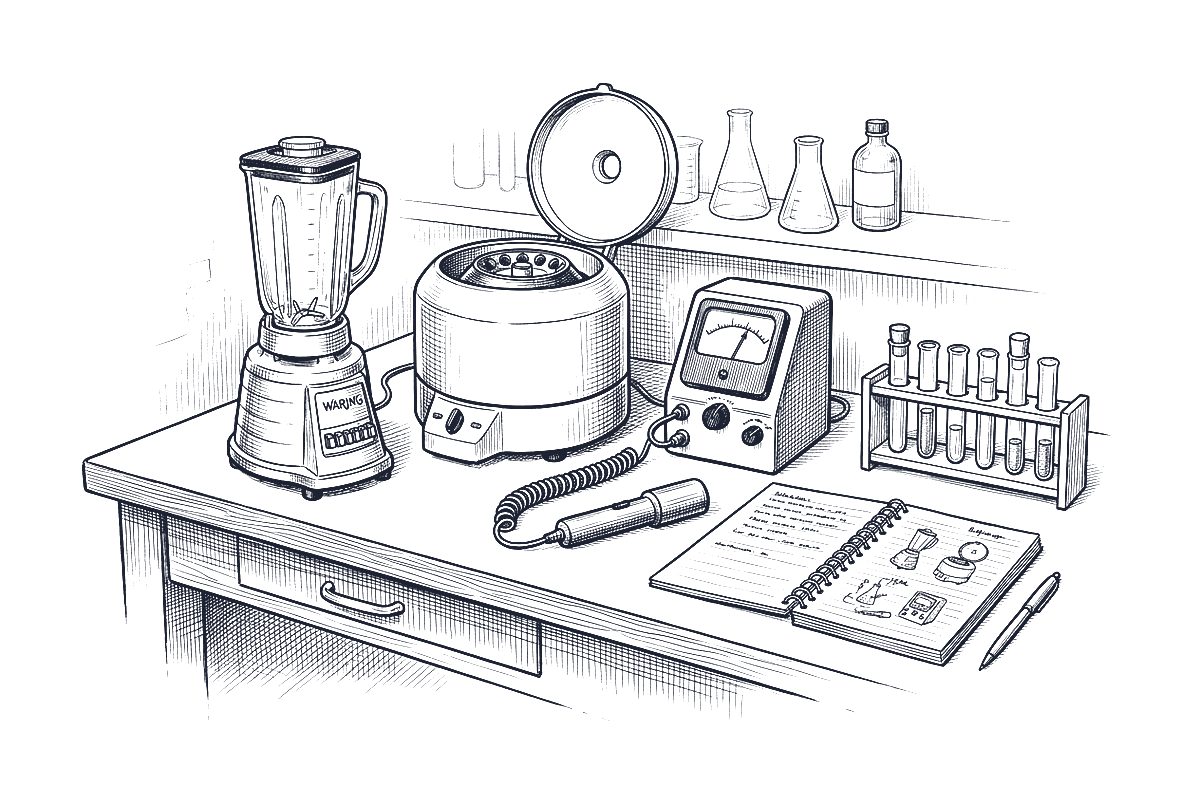
The coat stays outside; the DNA goes in. A blender knocked 75–80% of the coat tag off the bacteria, while most of the DNA tag stayed inside. The new phages carried the parents' DNA tag and almost none of the coat tag.
So the genetic instructions of the phage are written in DNA. Together with Avery's work, this convinced most biologists. A year later Watson and Crick showed what DNA looks like.
Why it matters today
Phages are being used again to treat infections that antibiotics cannot cure. And the idea "a shell that delivers genes into a cell" is how many gene therapies and some vaccines work: a harmless virus coat carries the instructions inside.